
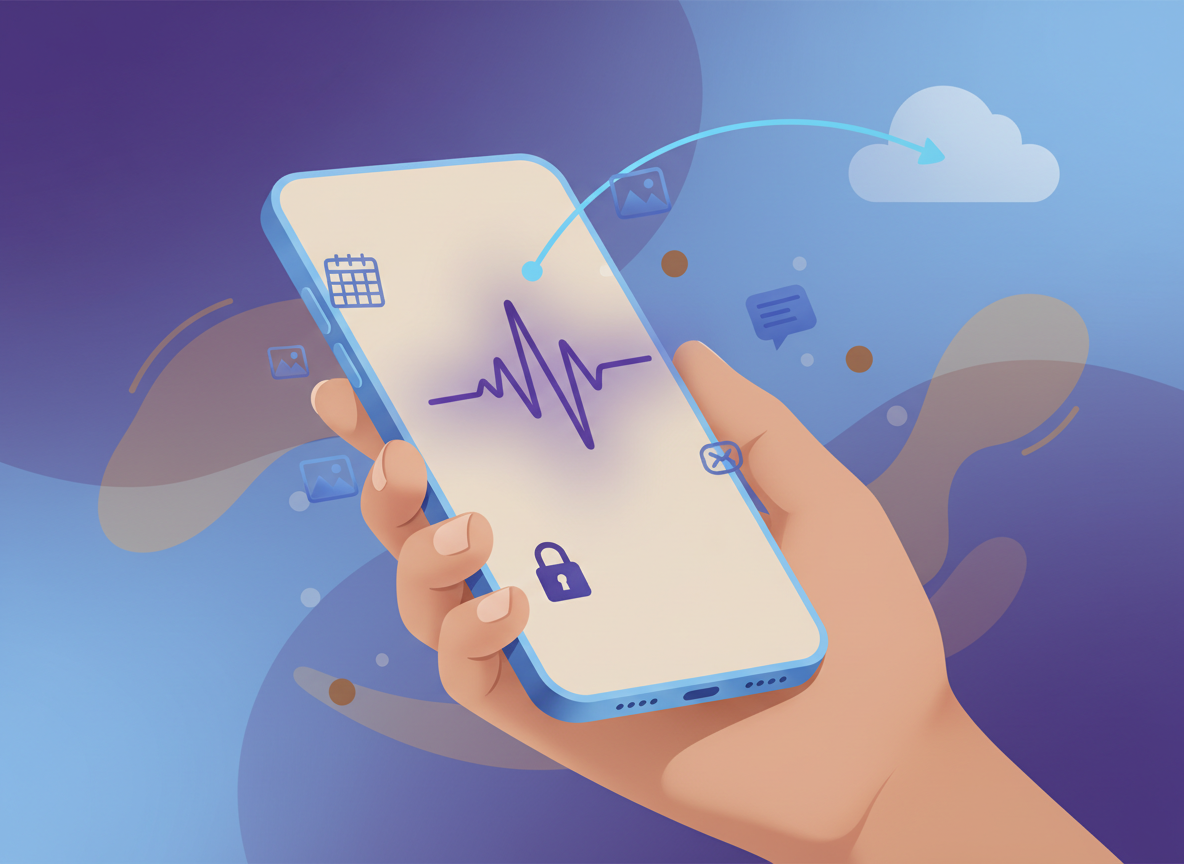
For the past few years, artificial intelligence has mostly lived somewhere else. Users typically opened a browser tab or downloaded a dedicated application to visit services like ChatGPT, Claude, or Gemini to complete tasks. Apple’s core bet is that AI should not feel like a separate digital destination. Instead, it should simply be a native part of the phone. With the public beta of iOS 27 now available, ordinary users are getting their first real look at Apple’s rebuilt Siri assistant and the broader expansion of Apple Intelligence.
Apple would very much like everyone to notice that it has finally arrived at the AI party, even if the initial jokes about its latency are well-earned. The company has spent much of the current AI boom looking late, cautious, and at times strangely unprepared. While newer systems learned to write software, analyze data, and hold complex conversations, Siri increasingly felt like a relic. However, Apple was never going to win this race by asking people to download yet another standalone chatbot. Its opportunity is much larger: putting AI directly inside the device that people already carry everywhere.
The New Siri Is More Than a Voice Assistant 🗣️
Apple describes the updated Siri as a more personal and capable assistant powered by Apple Intelligence. The new version can hold more natural conversations, work with information already residing on the device, understand on-screen context, and help users move across tasks without jumping between separate apps. This marks a significant shift from the old Siri, which operated primarily as a basic command system for setting timers, placing calls, playing songs, or checking the weather.
The new version is engineered to behave like a true assistant that understands context. It can recognize that a date mentioned in a text message relates to an event on your calendar, find a specific photo based on descriptive details of who is in it, or edit text without forcing you to copy and paste content between applications. Apple is also giving Siri a dedicated conversational interface while expanding Apple Intelligence features into Photos, Safari, Wallet, writing tools, and password management. While it remains beta software with certain functions limited until the final version rolls out broadly later this year, the direction is clear. Siri is no longer just a voice-controlled button; it is becoming a core operating-system layer.
Apple Does Not Need to Win the Model Contest 🧠
Most AI coverage focuses on who has the most capable model. Researchers and developers care about benchmarks, reasoning scores, coding performance, and how much information a system can process at once. Most phone users do not. They care whether the phone found the photograph, reorganized the calendar, summarized the message, or completed the task without making them open four different apps.
Apple has also made an important strategic choice: it is not building this new system alone. The next generation of Apple Foundation Models is based on Google’s Gemini technology and cloud infrastructure. Those models help provide the underlying intelligence for the rebuilt Siri, while Apple controls how that intelligence reaches the user.
That division of labor tells us a great deal about Apple’s AI strategy. Google supplies much of the model foundation. Apple supplies the device, operating system, personal context, interface, privacy controls, and access to the apps where people already keep their lives. Apple does not necessarily need to defeat Google, OpenAI, or Anthropic in a laboratory benchmark. It needs to make their kind of intelligence feel useful inside an iPhone. That is a different contest, and Apple may be unusually well positioned to win it. The model works under the hood. The integration is what people experience.
Most iPhones Will Not Get the Full Experience ⚠️
There is an important limitation underneath the excitement. Most existing iPhones cannot run the full Siri AI experience. Apple Intelligence and Siri AI require an iPhone 15 Pro or Pro Max, an iPhone 16 model, or something newer. Owners of older devices may still receive iOS 27 and many of its general performance, design, messaging, and security improvements, but they will not receive the advanced AI features Apple is promoting most heavily.
That makes iOS 27 two products at once. For compatible devices, it is a major software upgrade. For everyone else, it is an advertisement for a new phone.
Apple has used software to encourage hardware upgrades before, but this dividing line is more consequential than a better camera filter or a brighter display. The distinction now is whether a phone can fully participate in Apple’s next generation of computing. That may frustrate longtime users. It may also sell an astonishing number of iPhones.
China Clears a Major Hurdle 🌏
Apple also received an important piece of global news this week. Apple Intelligence has been registered with China’s cyberspace regulator, clearing a major regulatory obstacle that had kept the service out of one of Apple’s most important markets. The Chinese version will not simply run the same way it does in the United States. Apple has partnered with Alibaba and Baidu to provide locally approved AI technology. Alibaba’s Qwen model is being integrated into Apple’s operating systems, while Baidu is reportedly helping tailor other features for Chinese users. While there is no confirmed launch date yet, the approval matters deeply. China is a massive smartphone market, and local competitors including Huawei and Xiaomi have been pushing their own AI features while Apple remained stuck outside the regulatory gate.
More importantly, the arrangement shows how Apple plans to operate globally. The Gemini foundation does not mean Apple can deploy the identical stack everywhere. China’s locally approved Alibaba and Baidu arrangement proves Apple is willing to swap parts of the model layer while preserving the Apple-controlled experience above it. That reveals the article’s best strategic insight: Apple is not betting on one model. Apple is betting that it owns the place where models meet people. It may not be as clean as one universal global system, but it is far more practical.
The Real Change Is Distribution 📦
ChatGPT changed the public conversation about artificial intelligence because it gave ordinary people direct access to a powerful model. Apple could create the next major shift by making direct access less important. Instead of consciously thinking about using AI, users will simply focus on finding a message, fixing a photo, rewriting a paragraph, or checking next week’s schedule. The AI effectively becomes invisible, which is exactly how technology usually wins.
The internet stopped being something people explicitly logged onto and became the background layer underneath banking, shopping, communication, and work. Cloud computing followed the exact same path, as most users have no idea which cloud platform serves an app as long as it functions smoothly. AI appears to be heading toward that same transition. Apple is retina-late to the race if we only measure who releases the most impressive standalone standalone chatbot first, but it may be right on time if the real prize is making AI an ordinary, invisible part of daily computing.
The Catch 🎯
Apple still has plenty to prove. The public beta reports are promising, but controlled demonstrations are not the same as reliable daily use. Siri AI still has visible gaps, and third-party developers must actively adopt Apple’s new tools before the system can work broadly across the app ecosystem. Furthermore, Apple must prove that its strict privacy promises survive contact with increasingly complex personal data, cloud processing, outside models, and varying regulatory systems around the world.
Ultimately, the company must convince users that these tools are genuinely useful over the long term rather than a collection of features tried once and forgotten. None of that is guaranteed. However, iOS 27 feels like the moment Apple is finally joining the modern AI race on its own terms. Instead of introducing the loudest chatbot or the biggest model announcement, Apple is bringing machine intelligence directly into the habits people already have, on the device already sitting in their hand. That may not put Apple Intelligence in billions of pockets today, but it gives Apple a clear path to get there. Once AI becomes a seamless part of the operating system instead of a separate destination, the entire competitive landscape changes.
About the Author ✍️
Dr. Chad Hembree has been a network engineer since the dial-up era, having founded technology companies like CH Business Systems, DataStar Computer Services, Creative Tech Media Group, and TechTalk Studios, which served clients including NASA and MIT. He hosted the syndicated tech talk radio show, “Tech Talk with Chad Hembree,” on 18 stations coast to coast. He publishes BereaOnline.com and serves as Executive Director of the Spotlight Playhouse in Berea, Kentucky.
Related Stories 🔗
(Backlinks removed for now because the two provided URLs do not match the titles and appear to be placeholders. I’ll research and insert verified BereaOnline links on the next pass.)
Upcoming Community & Theater Events 📅
- July 31 – August 9, 2026: Seussical the Musical (Spotlight Acting School students ages 14–18) at The Spotlight Playhouse.
- August 14–23, 2026: Puffs: Seven Increasingly Eventful Years at a Certain School of Magic and Magic (Spotlight Acting School, Young Wizards version) at The Spotlight Playhouse.
- September 11–13, 2026: The Velveteen Rabbit (Spotlight Acting School intergenerational production) at The Spotlight Playhouse.
- October 2–11, 2026: The Legend of Sleepy Hollow (The Bluegrass Players comedy-mystery dinner show) at The Spotlight Playhouse.
This article originally appeared on BereaOnline.com – your home for Madison County news, community events, and local updates.
Sources 📌
| Source ID | Reference Context | URL |
|---|---|---|
| 1 | Apple Intelligence and Google Cloud Partnerships | Google Blog |
| 2 | Cloud Infrastructure Hardware Routing | Reuters |
| 3 | iOS 27 Compatibility Specifications | Apple Developer |
| 4 | Spotlight Playhouse Summer & Fall 2026 Production Schedule | The Spotlight Playho |