
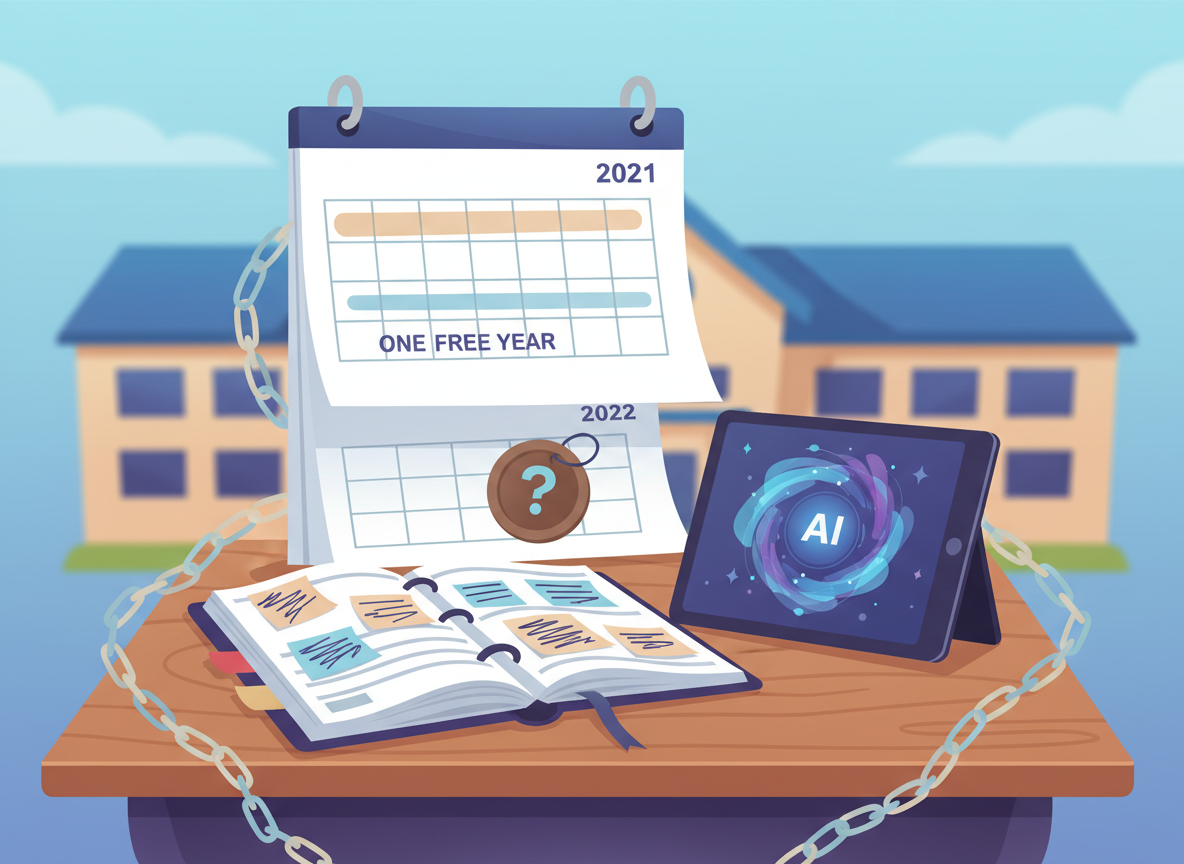
Anthropic has introduced Claude for Teachers, offering verified K-12 educators across the United States a full year of free access to premium Claude capabilities. At first glance, there is very little to criticize in this initiative. Teachers are systemically overworked, school budgets remain perpetually stretched, and lesson planning routinely spills into evenings and weekends. Many educators already spend hundreds of dollars of their own money on basic classroom supplies, software subscriptions, decorations, books, and essential items that the public school system fails to provide. Offering them a highly capable digital assistant for free sounds like a welcome, well-deserved gift.
Much of the structural offering is genuinely impressive. Claude for Teachers includes access to premium features, Claude Code, and background automation via Claude Cowork, along with specialized teaching tools and direct connections to curriculum resources mapped to the academic standards of all 50 states. Educators can utilize the system to draft lesson plans, differentiate materials for varying learning readiness, review classroom diagnostics, and automate highly repetitive daily administrative tasks. Crucially, Anthropic explicitly states that teacher conversations will not be used to train its underlying machine learning models, and the entire framework operates under a K-12 Data Processing Addendum designed to comply with the Family Educational Rights and Privacy Act (FERPA). These are meaningful, highly necessary privacy protections, and the concern is not that Anthropic is offering educators something useful. The concern is what happens after it becomes indispensable.
Free Is a Powerful Marketing Tool 🎁
Technology corporations have deployed free introductory trials for decades to secure enterprise footprints. The strategy is straightforward: give users access to a premium product, let them master its mechanics, and encourage them to migrate their workflows, files, and daily habits into the platform. Once the software becomes structural to how an individual functions, the vendor introduces a paid tier for continued access. From a pure product marketing standpoint, the play is brilliant. From an educator’s standpoint, it can easily transform into an operational trap.
A full year is more than enough time for a teacher to build custom lesson templates, grading workflows, automated parent newsletters, and standardized classroom data systems inside Claude. It is long enough to forget how much time those administrative tasks drained from their week before the software arrived, and it is also long enough for a school administration to quietly absorb that increased digital output into its baseline expectations. A teacher who once spent three hours preparing differentiated materials might complete the task in 30 minutes with AI optimization, but that newfound efficiency quickly becomes the new baseline. When the free year inevitably ends, the teacher may no longer view the tool as an optional luxury; it becomes the only viable mechanism for managing an expanded administrative workload. This is exactly where a generous corporate promotion can morph into a personal out-of-pocket expense.
The Missing Second-Year Pricing Strategy 💳
Anthropic has stated that verified K-12 educators can enroll in the program until June 30, 2027, to secure their initial twelve months of free access, but the company has not publicly explained the financial roadmap after that period concludes. There is no announced permanent teacher discount, no promised subsidization framework, and no clear indication of whether these accounts will automatically downgrade to standard consumer limitations or require conversion into individual commercial plans. To Anthropic’s credit, standard billing and seat purchasing options are explicitly deactivated on these educator accounts, confirming that this is not an intentional auto-renewal scheme.
However, the complete lack of an automatic billing mechanism does not eliminate the systemic leverage. The pressure to pay will not originate from a credit card pre-authorized on file, but from an overworked teacher who has built a year of professional infrastructure around a single interface and feels structurally unable to abandon it. A standard Claude Pro subscription currently costs $20 per month or $200 when billed annually. While that expense appears negligible to a Silicon Valley technology laboratory, it represents a substantial recurring bill for an educator who is already personally financing basic classroom necessities.
Individual Subscriptions and Institutional Shifts 🏫
This dynamic highlights the most problematic element of the current rollout. Claude for Teachers is being pitched directly to individual educators rather than integrated through existing school district procurement channels. Anthropic indicates that a separate product for schools and districts is coming later, which means the first wave of adoption will happen largely through individual teachers creating and managing their own private accounts. The school system extracts the functional benefits of this arrangement while assuming zero financial risk.
The teacher invests personal hours mastering the system, building out workflows, and accelerating corporate data entry, all while utilizing the platform to satisfy rigorous district administrative requirements, compile performance data, and coordinate parental outreach. When the promotional period terminates, the financial burden should not quietly shift to the individual worker. When a school district determines that productivity suites, student information databases, or digital curriculum assets are essential to the educational mission, the institution assumes the cost. Generative artificial intelligence must be governed under the exact same procurement rules. If automated workflows become a standard expectation for managing classroom instruction, the district must purchase, secure, and manage those licenses collectively rather than expecting individual teachers to personally subsidize public school infrastructure.
The Problem of Classroom Inequity ⚖️
Leaving AI adoption to individual financial capacity also introduces severe equity concerns between classrooms and districts. Imagine two educators completing their free promotional year under identical administrative pressures. One teacher can comfortably absorb a continuing personal subscription into their household budget, while the other cannot. The first continues to leverage automated grading logic, state-standard alignment tools, and an accumulated library of customized digital assets, while the second must revert to restricted free tiers or abandon the workflows entirely.
Consequently, students in the same building begin receiving fundamentally different layers of instructional material optimization based entirely on whether their specific teacher can afford a premium software subscription. This dynamic risks expanding into a broader systemic divide between affluent and underfunded school districts. Wealthy municipal systems possess the resources to purchase centralized institutional access through programs like the Claude for Nonprofits framework, whereas underfunded rural and urban districts may quietly rely on individual teacher sacrifice to keep pace. Society already asks educators to close too many structural funding deficits with personal capital; machine learning software should not be added to that list.
The Teachers’ Union Has a Difficult Balance to Manage 🤝
Anthropic is not entering schools without involving educators. The company is working with the American Federation of Teachers on privacy standards and responsible-use guidance for K-12 artificial intelligence. The two organizations also developed a train-the-trainer program intended to help teachers understand when AI is useful, when it is risky, and how it should be handled in classrooms. That involvement is encouraging, as teachers should help shape education technology rather than having it imposed on them by administrators, vendors, or technology companies.
But the union also has a difficult balance to manage. Helping teachers understand Claude is not the same as promising that teachers will be able to afford Claude once the introductory year ends. The AFT can help establish standards for privacy, safety, and responsible use. It should also ask the economic questions that matter to its members: Will schools pay for the tools they expect teachers to use? Will educators be offered a permanent and affordable price? Could workloads increase after AI makes certain tasks faster? Will teachers who cannot afford a personal subscription be placed at a professional disadvantage? The danger is not that teachers will learn too much about artificial intelligence; the danger is that training, habit, and professional expectations will become established before anyone decides who is responsible for the bill. Teacher involvement should mean more than helping companies design better products; it should mean protecting teachers from becoming the unpaid purchasing department for school technology.
Schools Need to Be Involved From the Beginning 🧭
Anthropic is already testing what a more responsible rollout could look like. The company plans to work with Detroit Public Schools Community District on a formal pilot evaluating how Claude for Teachers affects educator well-being and classroom practice. That approach makes sense, as a district pilot allows teachers to experiment with the technology while the school system studies whether it actually saves time, improves instruction, creates new risks, or quietly increases expectations.
It also keeps administrators, technology staff, privacy officers, and educators in the same conversation. That is much healthier than allowing dozens of individual teachers to build separate workflows with personal accounts while the district remains unaware of what student data is being entered, what policies apply, or how dependent the staff is becoming on the product. The Detroit project is still an evaluation, not proof that the district will eventually purchase Claude for every teacher. But it offers a better path. Schools should test these systems openly, measure the results, establish rules, and decide whether the technology deserves a place in the district budget. A teacher should not have to become the school’s technology officer, privacy attorney, AI specialist, and subscription manager simply because the district has not created a plan. Institutional adoption should carry institutional responsibility. If schools benefit from teachers using AI, schools should help govern and pay for that use.
The Real Change Is Platform Lock-In 🔒
Anthropic is not alone in using free access to introduce AI into education. OpenAI, Google, Microsoft, and dozens of education technology companies are all trying to establish themselves in classrooms. That competition can benefit teachers by producing better tools, stronger privacy protections, useful training, and lower prices, but schools should understand the broader motivations at play. These companies are not only donating technology; they are competing to become the platform teachers learn first, trust most, and build their professional habits around. The company that becomes part of lesson planning today may become part of the district budget tomorrow. There is nothing inherently wrong with finding customers, but teachers should not be treated as an inexpensive route into public-school purchasing decisions, especially when they are already paying out of pocket to do their jobs.
I welcome Claude for Teachers, and I hope educators use the free year to save time, reduce paperwork, and spend more of their day working directly with students. I also hope teachers enter the program with their eyes open. Keep copies of important materials outside Claude, do not build a workflow that cannot be moved elsewhere, and ask the district what it plans to support after the free period. Most importantly, do not accept the idea that maintaining access should automatically become the teacher’s personal responsibility. Anthropic has created a thoughtful education product. Now it needs to address the most practical question of all: what happens when the free year ends? Teachers deserve more than a generous introduction; they deserve a sustainable price, a clear transition, and school systems willing to pay for the tools they expect educators to use.
About the Author 👤
Chad Hembree is an experienced tech professional and Executive Director at Spotlight Performing Arts. Currently, he integrates technical skills into his theater operations, including managing IT infrastructure and digital media for productions. Previously, he served as an IT Manager at Hospice Care Plus and CEO of DataStar Computer Services. A lifelong tech geek, he has been a long-time producer of the Tech Talk radio show and maintains the community news site, BereaOnline.com.
Related Stories 🔗
- The $228.7 Million Question: What Berea College Actually Means for Madison County
- Community Wealth and Hand-Drums: Looking Back at the Junebug Festival
Upcoming Community and Theater Events 📅
- July 31 – August 9, 2026: Seussical the Musical (Spotlight Acting School students ages 14–18) at The Spotlight Playhouse.
- August 14–23, 2026: Puffs: Seven Increasingly Eventful Years at a Certain School of Magic and Magic (Spotlight Acting School, Young Wizards version) at The Spotlight Playhouse.
- September 11–13, 2026: The Velveteen Rabbit (Spotlight Acting School intergenerational production) at The Spotlight Playhouse.
- October 2–11, 2026: The Legend of Sleepy Hollow (The Bluegrass Players comedy-mystery dinner show) at The Spotlight Playhouse.
Sources 🧾
| Source ID | Reference Context | URL |
|---|---|---|
| 1 | Claude for Teachers Program Launch Specifications | Anthropic Newsroom |
| 2 | AFT Educational AI Training Framework Integration | American Federation of Teachers |
| 3 | Detroit Public Schools Community District Pilot Details | Chalkbeat Education News |
| 4 | Spotlight Playhouse Summer and Fall 2026 Performance Lines | The Spotlight Playhouse |